Protect your revenue and intellectual property
beyond the download

PPAD helps publishers, training providers, and content businesses protect paid, licensed, and proprietary content after delivery — so distribution stays on your terms.

One download. Infinite distribution. That's the risk.

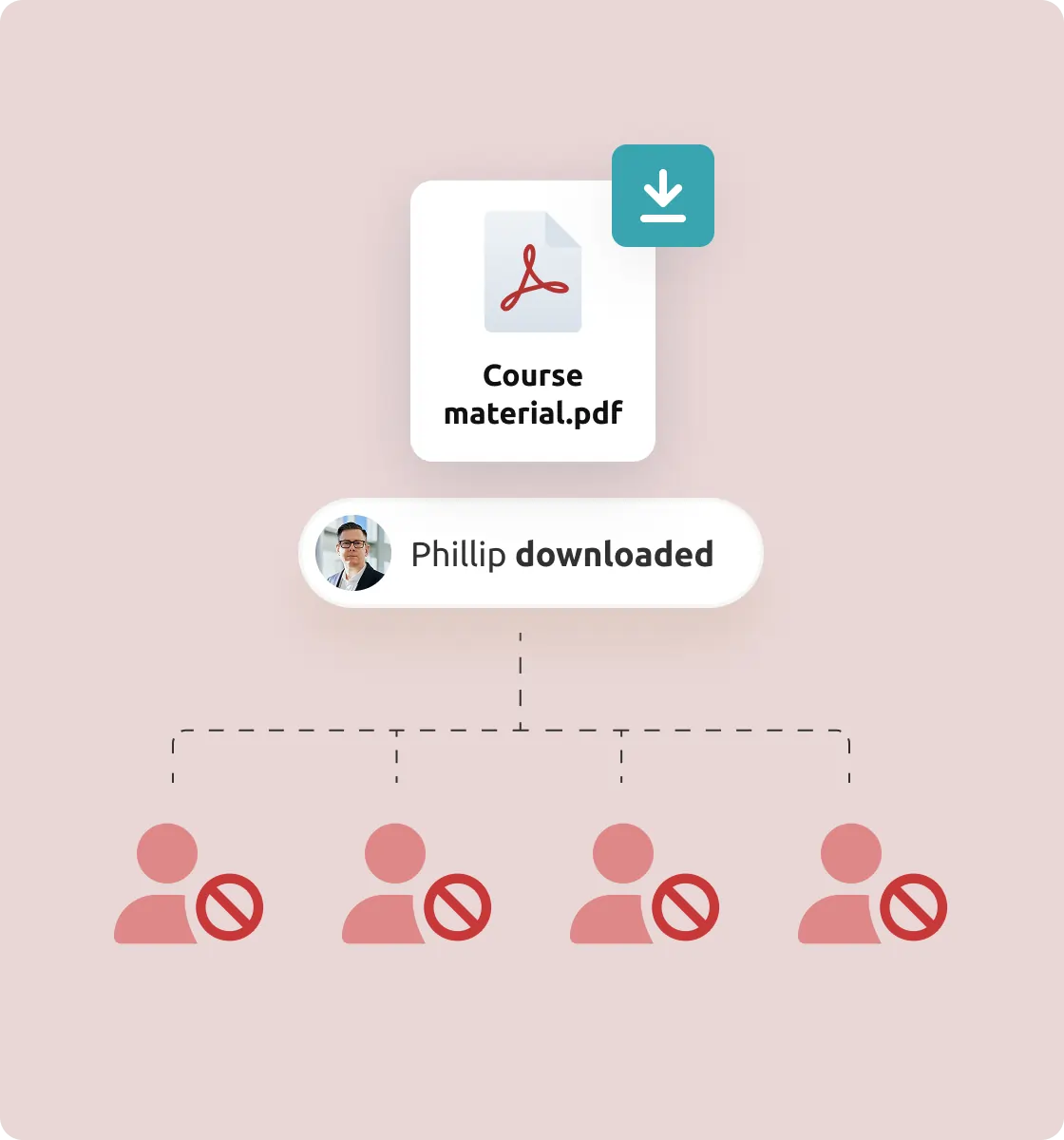
The moment a paying subscriber downloads your content, you lose control of it. They can share it with colleagues who haven't paid. Post it publicly. Keep it indefinitely after their subscription lapses. Or use it as input to AI tools that can extract, repackage, and redistribute your intellectual property at scale.

Traditional DRM addresses this, but it usually makes access so difficult that recipients stop using the content — and publishers stop using the DRM. PPAD finds a different path: persistent protection that travels with the file, without adding friction for the people accessing it.
What PPAD protects across publishing and training

Paid and subscription content

Premium reports, research, subscriber-only articles, and licensed materials — protected after delivery so access is tied to active subscriptions, not past downloads.

Courseware and certification materials

Training modules, learning resources, certification handbooks, and onboarding content shared beyond the LMS or internal portal — with controls that prevent redistribution.

Pre-release and embargoed content

Books, scripts, reports, and media files shared with reviewers, partners, or press before publication — with expiry and revocation to prevent early leaks.

Preview and promotional content

Selected chapters, gated resources, and preview assets shared externally — with the ability to control how much is visible and cut off access when the preview window ends.

Reviewer and editorial files

Drafts, proofs, and working files shared with editors, agencies, and contributors — with watermarking and revocation to prevent premature distribution or reuse.

Version-controlled course updates

When content is updated, revoke access to old versions while distributing new ones — so outdated materials don't continue circulating after you've revised them.

How PPAD works for publishers and training providers

Because PPAD works through an API, it fits directly inside your existing content delivery infrastructure.

1

Connect the PPAD API to your platform

Integrate once, and protection is applied automatically when files are delivered through your portal, LMS, or distribution system.

2

Files are encrypted and protected on delivery

Each file is encrypted with access rules tied to the authorized recipient. Only they can open it, and only for as long as you allow.

3

Update permissions or revoke access any time

When a subscription lapses, a license expires, or you simply need to pull content back — revoke access from your dashboard. Even from files already downloaded.

AI tools are making content theft easier, faster, and harder to detect

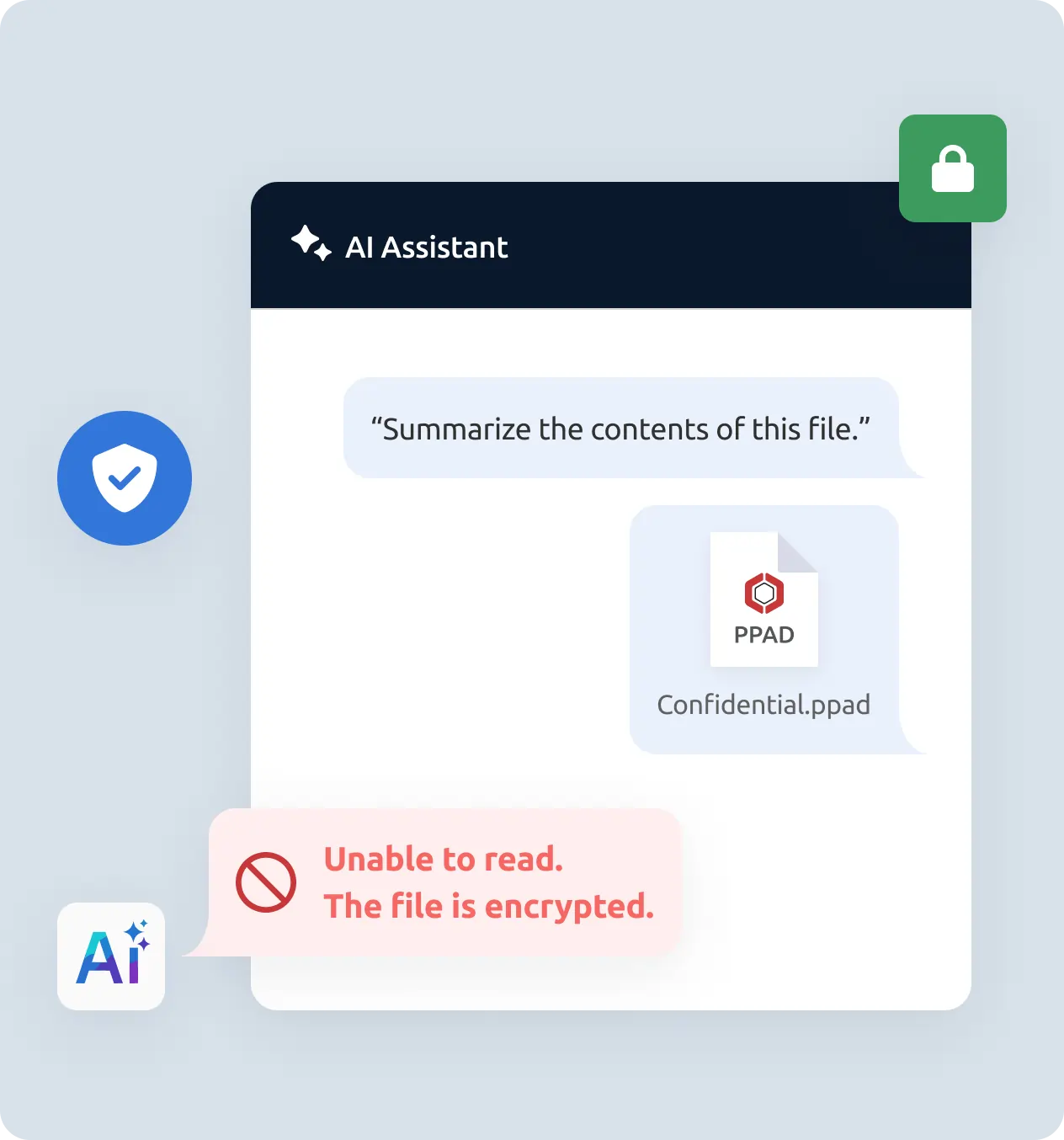
Paid reports can be repackaged. Training materials can be resold. Research can train competing AI tools. PPAD puts real barriers in the way of that misuse.

Encryption prevents unauthorized access to file contents

Copy-paste blocking stops bulk text extraction

Screenshot prevention reduces visual capture of sensitive content

Dynamic watermarks tie content to individual recipients, deterring leaks

Access revocation cuts off access when subscriptions, licenses, or relationships end

How PPAD  AI leakage →

Built on Digify's trusted security foundation

PPAD is built by Digify, trusted by over 700,000 professionals worldwide. The same ISO 27001-certified practices and security rigour that Digify customers rely on are built into every part of PPAD — with patent-pending encryption technology designed for persistent file protection.

700k+

Users on Digify

130+

Countries

2011

Founded

Protect the revenue and IP
behind every file you distribute.

Start protecting content today, or talk to us about how PPAD works with your platform.