Received a PPAD file? Click here to open the file

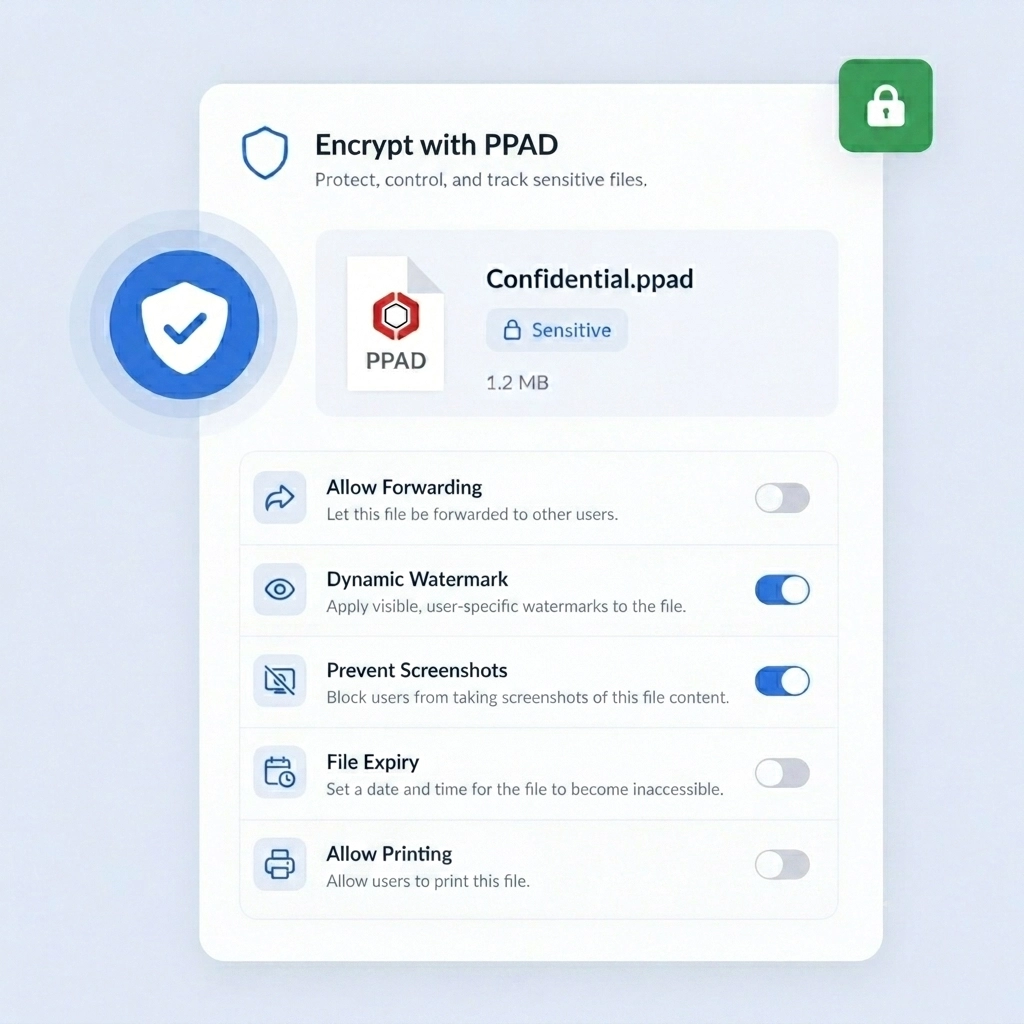
PPAD keeps access control, encryption, and audit visibility active after documents leave your systems, so the obligation to protect sensitive information travels with the file.
Sensitive documents move constantly between advisors, partners, clients, and teams. Once they leave your system, you lose visibility and control. PPAD keeps protection with the document itself, so you can manage access even after it's been shared.
PII
Names, contact details, identification numbers, financial records, health information
Confidential documents
Legal files, contracts, internal reports, client records, strategic documents
Protected health information
Patient records, referral documents, test results, clinical files
These aren't edge cases. They're the everyday situations where the obligation to protect sensitive documents outlasts the system they came from.
A bank emails a client's financial records to an external advisor. Three months later, the advisor's firm is acquired. The bank has no way to know who now has access to those files, or whether they've been shared further.
With PPAD: revoke access immediately when the relationship changes, and produce an audit trail showing exactly who accessed the file and when.
A healthcare team sends patient referral documents via email. Under HIPAA they remain responsible for that PHI after it's sent, but once it's in someone else's inbox, there's no control over what happens to it.
With PPAD: encryption persists after delivery, unauthorized recipients are blocked, and access can be revoked if a document reaches unintended parties.
A consulting firm's MSA prohibits client PII from being used as AI input. But once a file containing client information is emailed externally, there's no technical control over whether a recipient copies it into an AI tool.
With PPAD: copy-paste blocking and encryption make it significantly harder to extract content into AI tools, with a full audit trail to support MSA compliance.
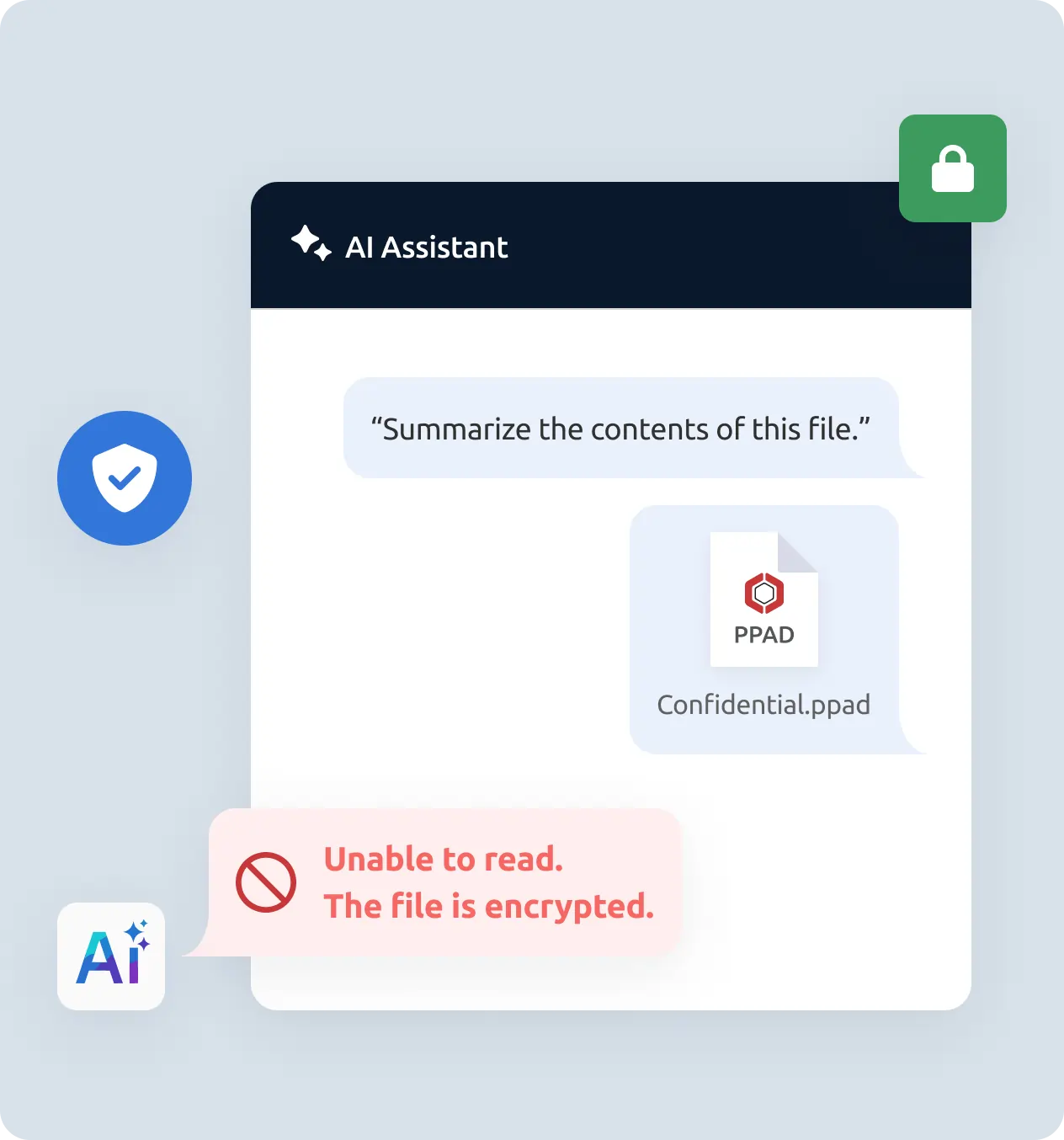
Enterprise MSAs increasingly include explicit restrictions prohibiting PII and confidential documents from being used as AI input or transmitted to third-party AI tools. Once a document is emailed or downloaded, there's no native way to prevent a recipient from feeding it into an AI tool, a potential breach that happens without any malicious intent.
PPAD's encryption ensures that protected documents remain inaccessible to AI systems after sharing. Copy-paste blocking and screenshot deterrence add further barriers to extraction. And if a document reaches unintended parties, revocation cuts off access immediately.
How PPAD reduces AI leakage risk →
PPAD is a modern, low-friction DRM (Digital Rights Management) solution. Protection travels with the file itself, so you stay in control after it's sent, forwarded, or downloaded. No matter where it ends up.

GDPR requires protection of personal data from unnecessary access and onward sharing, even after it's legitimately shared externally. PPAD keeps access control active after disclosure, with the ability to revoke when the processing purpose ends.
Healthcare organisations remain responsible for PHI after it's sent to referrers, partners, or external teams. PPAD keeps access tied to authorized recipients after sharing and allows revocation if documents reach unintended parties.
ISO 27001 requires a formal, auditable information security management system. PPAD extends that control boundary to cover documents after external sharing, bringing file access, distribution, and visibility inside your governance framework.
If your organisation operates under specific regulatory frameworks, PPAD maps directly to their requirements after documents are shared externally.
PPAD is a product by Digify, which has helped teams share sensitive information securely since 2011. The same ISO 27001-certified practices, security rigour, and trust that Digify customers rely on are built into every part of PPAD, with patent-pending encryption technology designed specifically for persistent file protection.
800k+
Users on Digify
138+
Countries
2011
Founded
Book a demo and we'll walk through how PPAD fits your specific compliance and document protection needs.