Received a PPAD file? Click here to open the file


Add persistent protection to Gmail and Google Drive so you stay in control of sensitive content after it's sent, forwarded, or downloaded — blocking leakage to unauthorized people and AI tools, without changing how your team works.
Gmail and Drive are designed to make sharing frictionless. And they do that brilliantly. But once a sensitive email is forwarded, or a confidential file is downloaded, Google has no way to help you with what happens next.
Emails land in external inboxes. Files sit on personal laptops. Sensitive information gets uploaded into AI tools. And you have no visibility, no control, and no way to undo it.
PPAD closes that gap. It’s a low-friction DRM solution built for Google Workspace — protection stays with the email or file itself, so even after it leaves Google’s environment, you’re still in control.
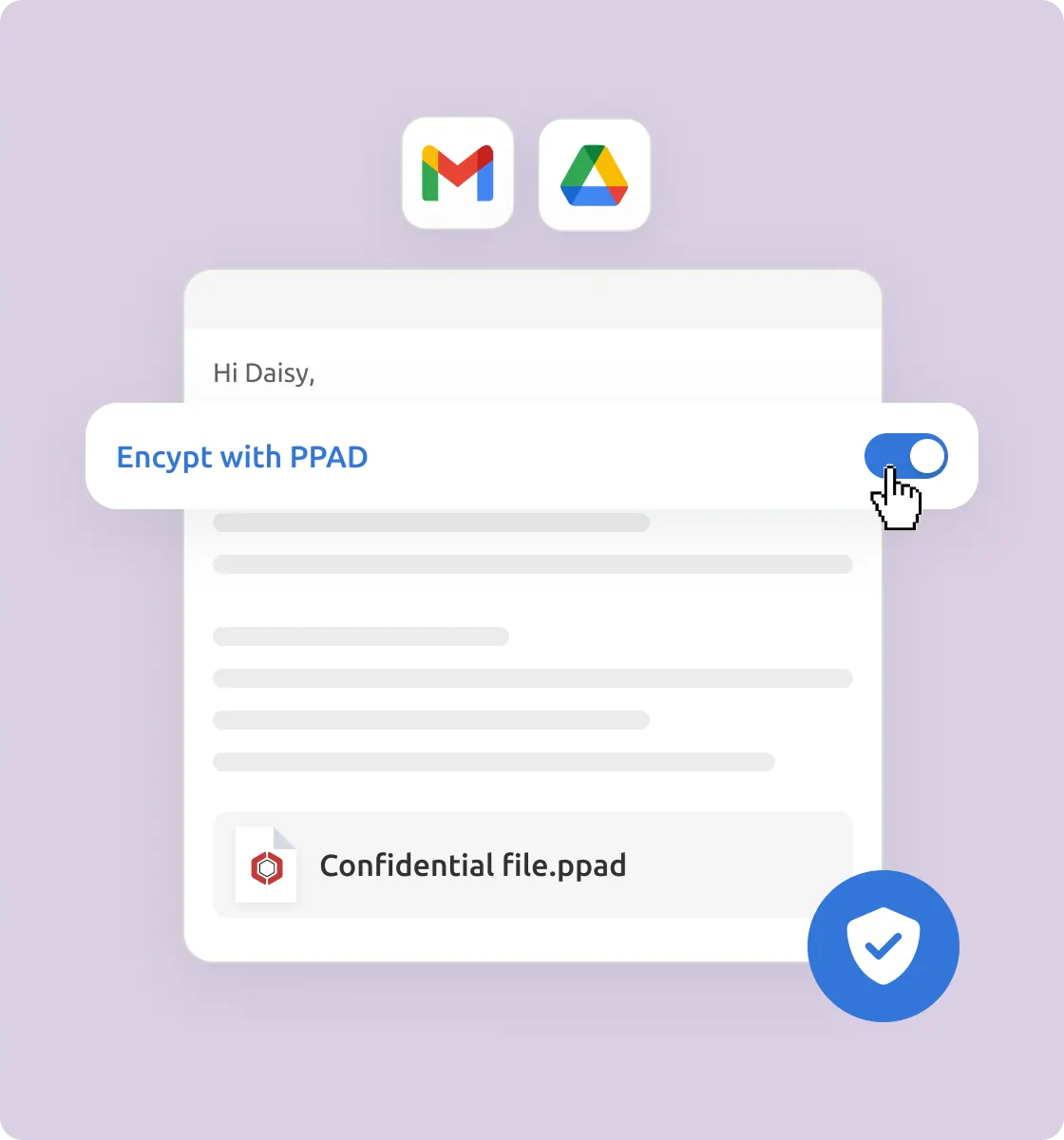
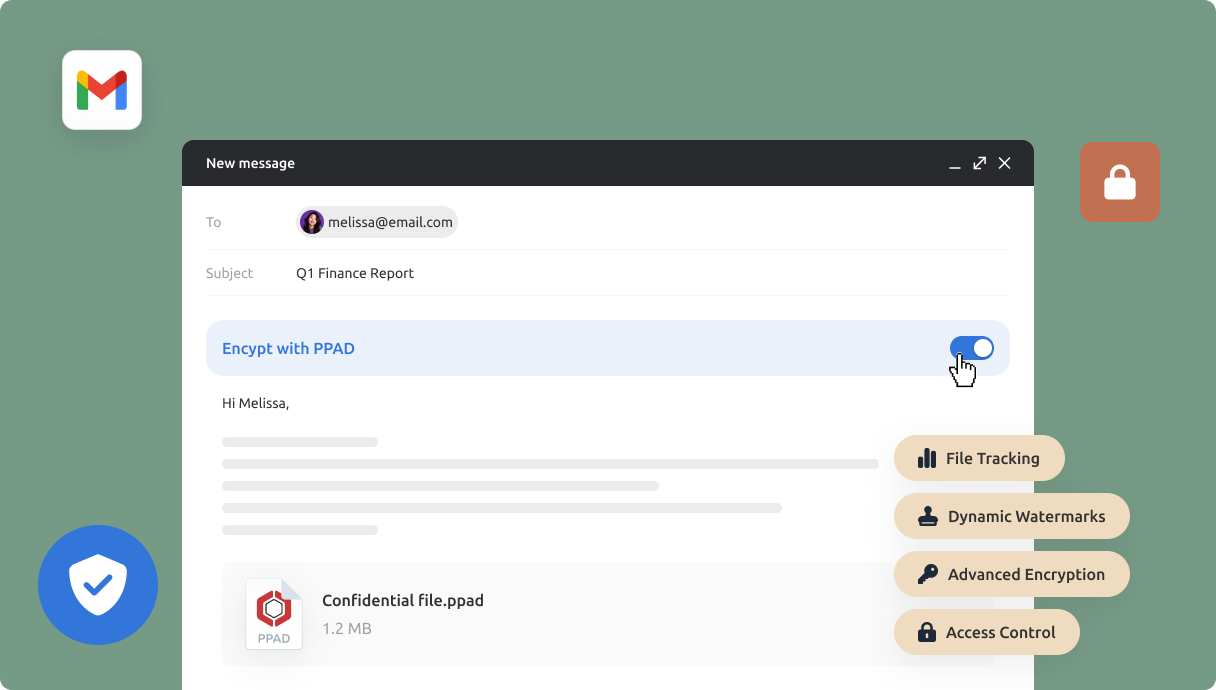
PPAD adds a protection toggle directly inside Gmail. Turn it on before you send, and your email body and attachments are encrypted automatically.
Google Drive controls access inside Drive. Once a file is downloaded, that protection ends. PPAD converts your Drive files into protected .ppad files that keep their access rules wherever they go.
When someone leaves your organisation, you can revoke their Google account. But you can’t revoke the files they already downloaded, the attachments they forwarded to a personal email, or the Drive files they moved somewhere else before their last day.
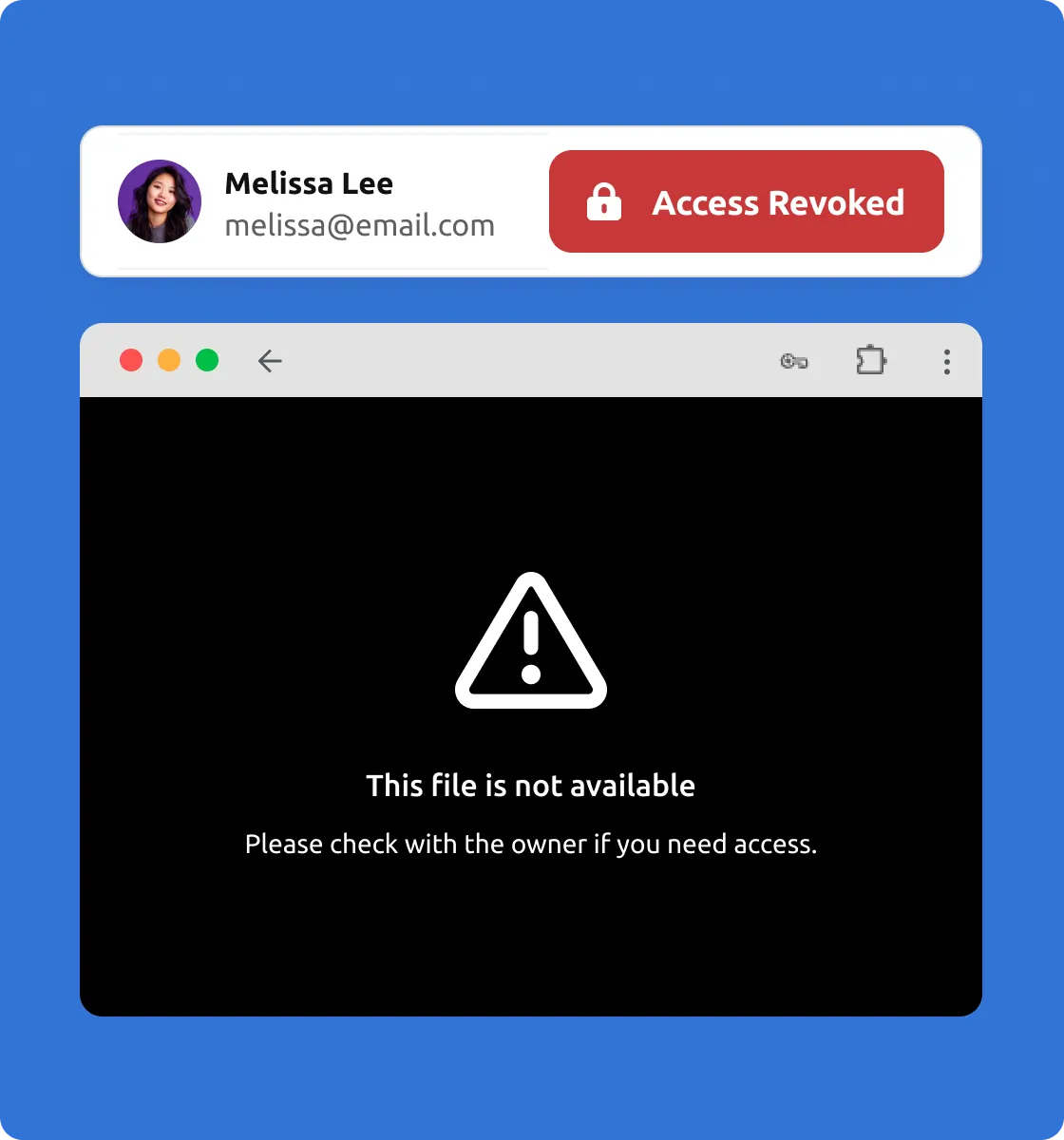
PPAD keeps access controls attached to the file, not the account. If you see suspicious activity after an employee is offboarded — or even if you just want to be cautious — you can revoke their access to every protected file and email they ever received. Instantly, even if they’re no longer in your organisation.
Track file access and activity after offboarding
Revoke access to specific files or all files at once
Get alerts when files are accessed from unexpected locations
Protection is a toggle in Gmail. A right-click in Drive. Nothing else changes for your team.
Compose your email as usual — body, attachments, and all. Turn on the PPAD toggle and choose what to protect, then send.
Select a file in Drive, right-click, and convert to .ppad format. The file stays in Drive — just now with persistent protection attached. Share through any channel.
Monitor opens, views, and forwards. Update permissions or revoke access at any time from your PPAD dashboard — even after the file has been downloaded.
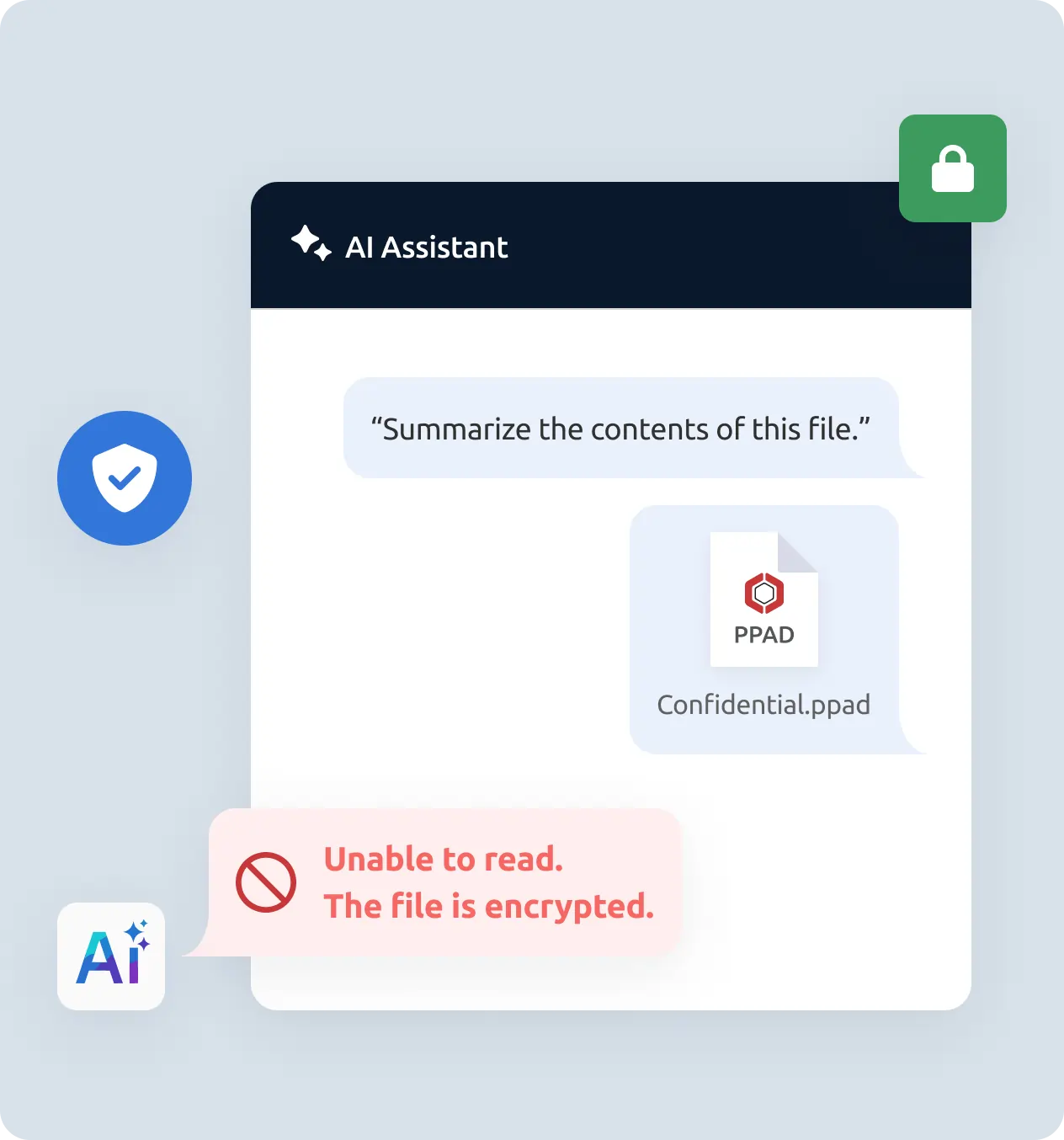
The risk isn’t just someone deliberately uploading sensitive files to an AI tool. It’s the normal, everyday spread of information. An email gets forwarded. A file gets downloaded. A colleague copies a paragraph into ChatGPT to summarise it faster.
PPAD makes it harder for sensitive content to be accessed, copied, or extracted in the first place.
Encryption keeps files unreadable to unauthorized access
Copy-paste blocking prevents text from being extracted
Screenshot protection limits the visual capture of sensitive content
Revocation cuts off access even after download
PPAD is built by Digify — a security company helping teams protect sensitive documents since 2011. The same ISO 27001-certified practices and security rigour that Digify customers rely on are built into every PPAD feature, with patent-pending encryption technology designed for persistent file protection.
800k+
Users on Digify
138+
Countries
2011
Founded



Yes. PPAD prioritizes the security and confidentiality of your documents by leveraging Digify’s trusted document security technology. Digify is a leading virtual data room and document security provider trusted by thousands of businesses worldwide, including financial institutions, law firms, and enterprises.
With Digify’s encryption, access control, and tracking features, every document you upload to PPAD remains protected from unauthorized access or sharing.
No. Recipients can open PPAD files directly in their browser without installing additional software.
Yes. Once a recipient opens a file, they can continue to access it offline for the duration you allow. Protection rules and restrictions still apply.
PPAD supports the following file types:
PDF: (.PDF)
Spreadsheets: (.XLSX)
Document ( .DOC, .DOCX, .MOBI, .ODT, .OTT, .EPUB, .XPS)
Presentation (.PPT, .PPTX, .PPTM, .PPSM, .POTM, .ODP, .OTP)
Private notes: (.TXT)
Images: (.JPG, .PNG, .GIF, .BMP)
Yes. You can revoke access or set an expiration date at any time, even after the file has been downloaded.
To open a .ppad file, you will need the PPAD Viewer. For full instructions, see our help desk guide on opening PPAD files.
Start with Gmail, Drive, or both. No setup calls. No workflow changes. Free to try.